
How sexy is the German food market?
What food manufacturers should consider before they enter the scene! (Author: Oliver Merckens)
When you think of Germany, many people think of a nation that works hard and is very disciplined. Enjoyment is often not the first priority, rather the price.
As is so often the case, the truth is different, and you have to look closely. Among the approximately 80 million inhabitants, there are many people who attach great importance to good and varied food. It is not for nothing that so many food start-ups have developed in Germany in recent years and the trend seems to be unbroken. This is also evident on the shelves of retailers, who are increasingly adding new products and brands to their range and testing them. German consumer likes to try out new products and is also open to international specialities. He has already got to know some brands on his numerous international trips.
Thus, the German food market can be a very attractive for foreign food producers and food startups. However, anyone considering this should take a close look at the market and its consumers beforehand!
In this article, I touch on a few points that need to be illuminated before entering the market.
Food Consumers
Knowing your consumers precisely is a prerequisite for targeted marketing and for selecting the right sales channels. But more on that later.
It should not be underestimated that the habits and expectations of consumers in the target country are very often different from those in the home country.
This refers to product packaging, taste and prices, among other things. What works great in the home country may flop in Germany because the product seems foreign, has an „exotic“ taste or is priced too high. In the end, you have to meet the customer’s taste so that he or she buys your product. This may mean that you have to develop a special recipe for the German market so that your product will also be successful here.
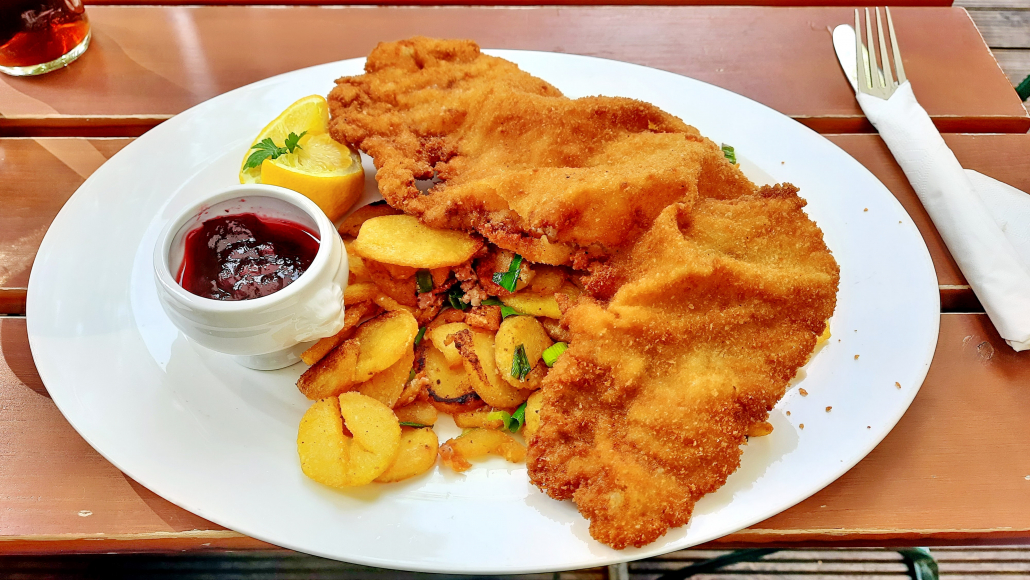
When analysing consumers, it makes sense to involve a local expert who can not only assess the regional characteristics but also speaks the language of the customers. A linguistic example of this: „Wiener Schnitzel“ on a restaurant menu means that the meat comes from veal. „Schnitzel Wiener Art“, on the other hand, means that it is pork. Maybe only nuances, but in the end a big difference. Not only in quality, but also in price.
How do I get my cut?
Competition within the German food market
Your product is certainly unique and also very successful on the domestic market. But do you know the market situation in Germany? Are there perhaps competitors with comparable products? If so, with which qualities are the products offered? How are they positioned in terms of price? Is your USP still valid here?
A targeted analysis of the market and your target groups is essential to be able to assess the actual situation correctly. The best way to do this is to be on the ground and familiar with the players in the market.
Marketing
It goes without saying that you should be present where your target groups are (customer journey & touch points). In Germany, too, social media activities are now standard for a food manufacturer. Depending on the target group, the focus should be on Instagram and TikTok. If the target group is older, Facebook is still a relevant medium.
Here, too, the importance of the „language“ in the posts should not be underestimated. These should fit the German market and be understandable accordingly. This applies just as much to the product website. German consumers have little desire to learn about products in other languages.
Beside online activities, you should also plan for classic measures. Especially with food products, consumers still want to hold the product in their hands and try it. Plan accordingly for tasting opportunities (trade fairs, participation in events, your own pop-up stores, etc.) for your new customers. Here, too, it is important to be present where your potential customers are.
Online-Shop
In the end, it’s all about sales. A first approach can be to sell via the company’s own German online shop. This usually inspires more confidence in the consumer than some foreign store whose pages are often only mediocrely translated. Ask yourself what an online store should look like for you as a customer so that you consider buying a new product.
It’s worth the effort, because it’s about gaining initial experience in the new market and getting direct feedback from customers. This is important for you, so that you can see how your product is being received and what adjustments you might still need to make? What’s more, you can use the practical knowledge you’ve gained specifically in your discussions with retailers.
Stationary Trade
The bigger and therefore more relevant step to successfully conquer the market is access to the food retail sector, as 40 million households regularly do their grocery shopping there. The big players here are EDEKA, the Schwarz Group (Lidl & Kaufland), REWE (incl. Penny) and the Aldi Group (Nord & Süd), which now account for about 80% of the market (check my article „How does the retail industry tick?„).
Basically, German retailer are open to innovation and their doors are open. As a food manufacturer, you need to know what makes food retailers tick and what they expect so that you can represent your interests in the best possible way. The better prepared you are, the more likely you are to be listed.
Conclusion
One should not be blinded by the huge potential of the German market. Many entrepreneurs want to get started right away and underestimate the differences to the home market. This quickly leads to wrong decisions and unnecessary money is burnt.
It is more effective to ask yourself the right questions beforehand and thus optimally prepare your product for entry into the German market.

